
← Insights
Energy · demand managementSeptember 2026Chiril Gaburici≈ 10 min read

The cheapest power plant is the one we never had to build

Moldova’s next energy resource lies not only in generation and storage, but on the consumer side of the meter.

Chiril Gaburici
Author · research noteChiril Gaburici

Green Spark · september 2026

In earlier articles, we discussed how renewable energy growth is changing Moldova’s energy market. After substantial additions of solar and wind generation, flexibility — the ability to save electricity and use it when the system needs it — becomes increasingly valuable.

There is another side to that challenge. Energy can be shifted in time not only with batteries. Consumption itself can be shifted.

If solar output peaks at midday while part of demand arrives in the evening, there are two obvious solutions: store daytime energy in a BESS (battery energy storage system) for the evening, or, where practical, move part of evening consumption into the daytime.

These mechanisms reinforce one another. Together they provide what a modern power system needs most: controllability. That is why, in my view, the next phase of Moldova’s transition must also take place on the consumer side.

01 · Consumption can also be an energy resource

Traditionally, the electricity system follows the customer. If the country needs more power at 19:00, it must generate more, import electricity, discharge storage or call on reserves.

But some loads can be moved in time. This does not mean switching people off or limiting their service. It means using energy when it is more abundant and cheaper.

A pumping station does not always need to fill its reservoir at a particular hour. Cooling can be produced in advance. A heat pump can heat water earlier, and a battery can charge during the day.

A car connected in the evening does not need to charge at maximum power at exactly 19:00. Its owner needs it ready in the morning.

The customer receives the same service while the electricity load profile changes. This is demand response.
02 · The most expensive megawatt is needed for just a few hours

Peaks are costly for a power system. Even when existing infrastructure is adequate most of the time, generation, grid capacity and equipment still have to be reserved for a short period of unusually high demand.

Reducing peak demand may have almost as much system value as adding generation. To assess Moldova’s potential, we need hourly load data, clear rules for customer participation and evidence of which peak loads can be shifted without disrupting operations.

If that flexibility becomes available, it is more than energy efficiency. It is a new resource inside the existing system.

03 · Price should tell customers when to use energy

Demand management needs a simple economic signal: price. If a customer pays the same at 14:00 and 19:00, there is little reason to change behaviour.

As day-ahead and intraday markets develop, wholesale prices increasingly reflect the time electricity is produced and consumed. Appropriate contracts and tariffs are needed for this signal to reach end users. Dynamic pricing is a logical next step.

At some hours electricity is plentiful and cheaper; at others it is scarce and more expensive. Customers need not monitor the market themselves. Energy management systems can gradually do this work for a building, business or charging station.

04 · A building becomes more than a consumer

Most buildings still use electricity passively. Yet a modern building can become a small energy asset.

Solar PV, BESS, heat pumps, building management systems, smart meters and energy management systems can work together.

When energy is abundant and cheap, the building can charge a battery, heat water or cool rooms in advance. At system peaks, it can reduce grid consumption without substantially compromising comfort.

This goes beyond energy efficiency: it is managed demand. Moldova could eventually have tens of thousands of such buildings.

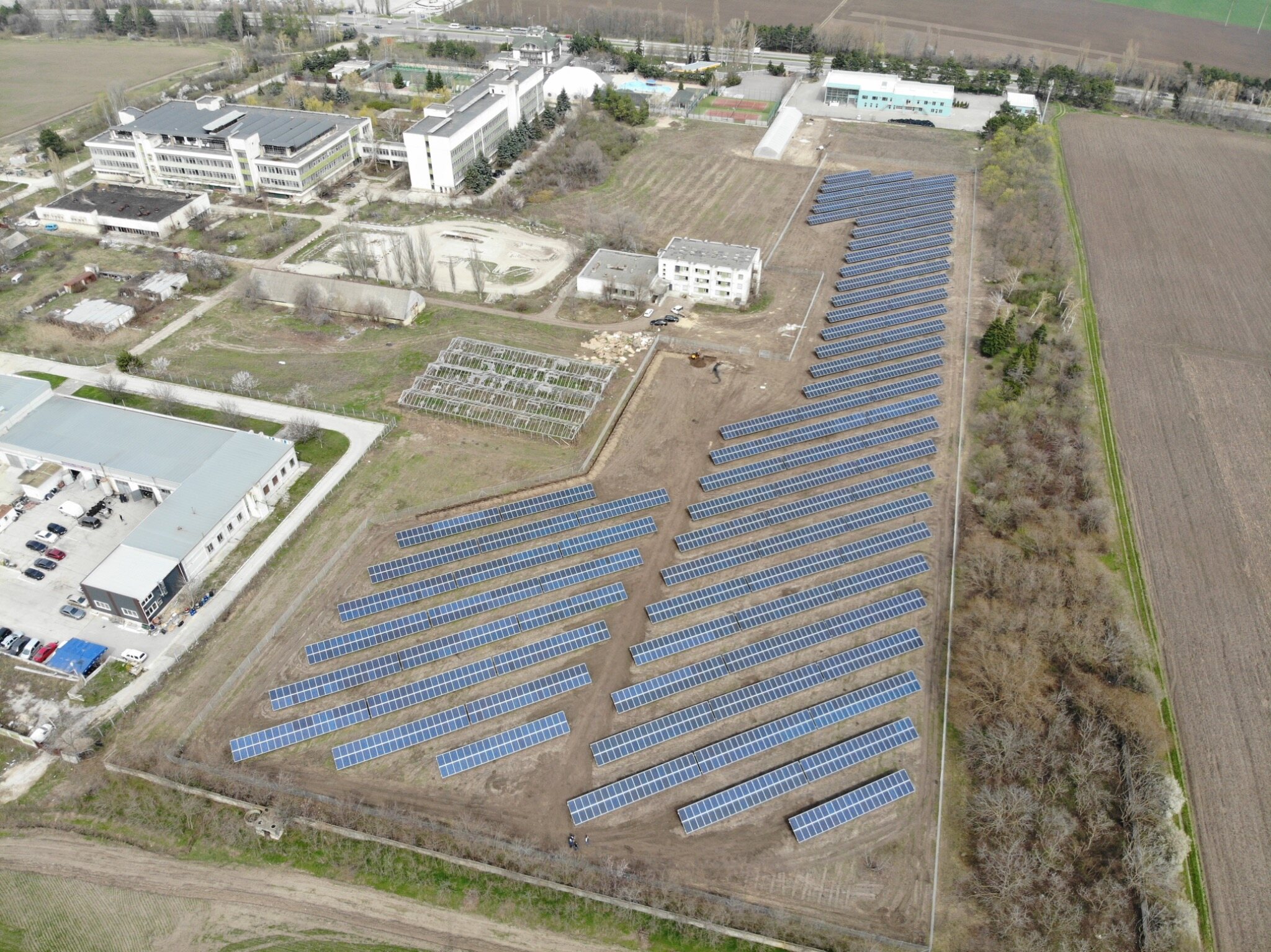
Fly Ren Solar Park
Solar generation creates a daytime resource that buildings can use more flexibly.

05 · Industry: find flexibility inside production processes

Pumps, compressors, refrigeration, ventilation, cooling, water heating, equipment charging and some production processes need not always run at peak hours.

The aim is not to force a business to consume less at any cost. It is to identify which loads are firmly tied to a particular time and which can move.

A company’s electricity demand then becomes a manageable asset. The customer can cut costs and the power system gains flexibility.

06 · Electric vehicles are a clear example

Suppose a car is plugged in from 19:00 to 07:00. Its owner has one requirement: a charged battery by morning.

For the grid, however, it matters greatly whether the car draws maximum power at 19:00 or spreads charging over the following hours. Smart charging can choose timing and power based on network conditions and electricity prices.

Later, vehicle-to-grid technology may let the car briefly supply electricity back to the grid, where the vehicle, charger, contract and market rules allow it.

Electric transport therefore creates new demand, but with suitable control it can also become a balancing tool.

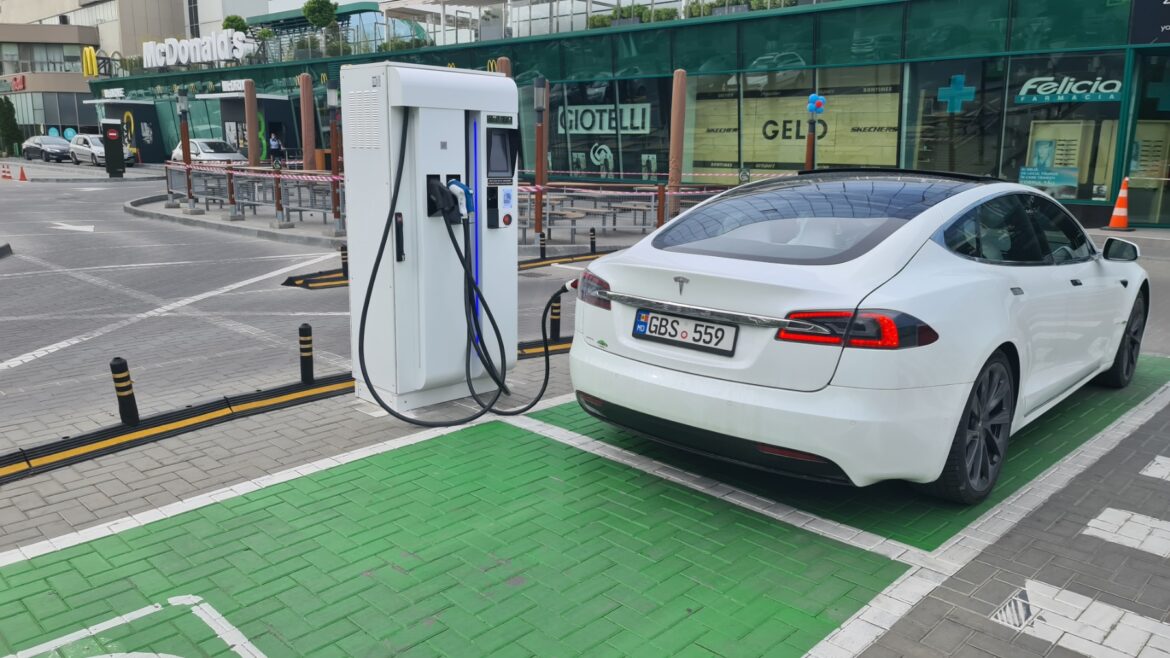
Fly Electric charging network
EV charging infrastructure can become part of manageable demand.

07 · The digital foundation is taking shape

To manage demand, we first need to see it. Smart meters do far more than automatically transmit readings.

A Moldovan Ministry of Energy pilot, supported by UNDP and the Italian government, plans to equip 60,000 homes and public buildings with smart meters. It is a practical first step toward better consumption data.

Further development of metering, variable-price contracts and aggregation of smaller consumers could lay the groundwork for virtual power plants. This is a development pathway, not a nationwide operating system today.

Together the pieces form a different architecture: measurement → data → price → automated control → flexibility.

08 · When small customers become one large resource

One home or one EV cannot noticeably influence a power system. Ten thousand homes, thousands of cars and hundreds of commercial buildings, solar systems, heat pumps and batteries can.

Connected by a digital control platform, they form a virtual power plant. There is no single building or turbine. Capacity is distributed across thousands of sites but can behave as one coordinated resource.

When the grid needs demand reduced by several megawatts, the task can be spread across thousands of devices. Each changes its consumption only slightly; together they have a meaningful impact.

09 · Manage first. Build next

Moldova still needs new power plants. It also needs BESS, stronger grids and more interconnections.

But the order of decisions should evolve. Before asking how much additional generation to build, we should ask what share of existing demand can be managed.

Then: how much energy can storage move in time? Only after that: how much new generation does the system truly require? The approach connects generation, storage and demand management.

10 · From producing energy to managing it

Moldova’s first energy transition phase focused largely on where energy comes from. The next phase will focus on how we manage it.

An energy resource can be a power plant, but also a battery, building, industrial business, heat pump, charging station, electric car or the ability to shift a few kilowatts from one hour to another.

When thousands of such assets work together, the system gains what it lacks most as renewables expand: controllability.

Moldova’s next significant energy resource may therefore be not another power plant, but existing demand that we finally learn to manage.

Chiril Gaburici · Green Spark
The cheapest power plant is the one we never had to build.

GS / demand response

Sources and methodology

Verified data on smart metering comes from Moldova’s Ministry of Energy. Demand flexibility and virtual power plant scenarios are the author’s analysis, not a description of a nationwide operating system.

  1. 01Ministry of Energy · smart meter pilot ↗
  2. 02Ministry of Energy · regulatory sandbox ↗
  3. 03European Commission · electricity market flexibility ↗
Green Spark Insights

This analytical material is for information only. It is not an investment offer or individual legal, financial or tax advice.