


Renewable Energy Market in the Republic of Moldova
Moldova is actively moving towards energy independence and decarbonization, making renewable energy (RE) a key development priority. The country has committed to increasing the share of renewable energy in its total consumption.
Overview and Current State of Moldova’s RE Market
- Rapid Growth: Over the past four years, Moldova’s renewable energy capacity has grown eightfold, reaching nearly 650 MW as of April 2025.
- Achieving Targets Ahead of Schedule: On some days, up to 30% of Moldova’s energy demand is met by renewables—originally a target for 2030. On June 29, 2025, renewable energy accounted for over 48% of total consumption, with peaks exceeding 82% during certain intervals.
- Vast Potential: Studies, including those by IRENA, estimate Moldova’s technical renewable energy potential at over 21 GW—10 times the current installed capacity of all power plants in the country.
Why Moldova’s RE Market is Attractive for Investors
Geopolitical and Energy Priority: Strengthening energy security and reducing dependence on imported resources are top priorities for Moldova, especially amid the current geopolitical climate. This creates a favorable environment for RE development.
Legislative Framework and Support Mechanisms:
- Law on Promoting the Use of Renewable Energy (2016, amended in 2018): Provides financial support mechanisms for investors.
- Tariffs and Tenders: Large-scale projects (over 1 MW for solar and 4 MW for wind) benefit from fixed 15-year tariffs allocated through tenders. In 2024, tenders for 165 MW of RE projects with total investments exceeding €190 million were launched. New tenders, including wind farms with energy storage systems, are planned.
- Net-Metering: Small-scale renewable producers (especially solar) benefit from net-metering, allowing them to feed excess electricity into the grid and receive credits. This significantly boosts investment appeal for households and businesses.
- Financial Guarantees: As of June 30, 2025, investors seeking to connect plants over 200 kW must provide financial guarantees to ensure only serious projects proceed, enhancing market transparency.
Government Support and International Cooperation:
- Energy Efficiency Fund: Offers financial support for energy efficiency and RE projects.
- Partnerships with IRENA and USAID: Moldova collaborates with international organizations to develop the RE sector, attract investment, and share expertise. For example, a Sustainable Energy Investment Hub was launched with support from USAID and the UK.
- National Energy and Climate Plan: Moldova is implementing strategic documents to meet RE and emissions reduction goals.
- Infrastructure Development: New regulations provide improved grid access for RE projects (an additional 109 MW capacity became available). The government is modernizing electricity grids and ensuring transparency in procurement processes.
- Rising Demand and Public Support: Awareness of RE benefits is growing among both consumers and businesses, stimulating demand for green energy.
Challenges and Risks
- Financial Barriers: RE deployment requires significant capital. Continued government incentives (tax breaks, grants, soft loans) and financial instruments are crucial.
- Bureaucratic Hurdles: Although progress has been made, obtaining permits and grid connections can still present challenges, though new rules aim to reduce these obstacles.
- Grid Stability: As the share of renewables grows, upgrading grid infrastructure and expanding energy storage systems is vital to ensure supply stability. Moldova’s plans for wind farms with storage systems show recognition of this issue.
- Investor Competition: As the market grows, competition among investors will intensify.
Conclusion
Moldova’s renewable energy market demonstrates high long-term investment potential. The government is actively creating favorable conditions through transparent support mechanisms and improved legislation. Significant untapped RE potential, growing domestic demand, the drive for energy independence, and international partnerships make Moldova a promising destination for solar and other renewable energy investments.
For investors prepared for long-term projects and adaptable to evolving regulations, Moldova offers considerable opportunities for growth and profitability—particularly in solar power projects, which remain attractive due to their relatively fast payback and mature technologies.
Read More

Investing in Renewable Energy: Republic of Moldova
Investments in renewable energy (RE) in Moldova are gaining momentum, but require a comprehensive assessment of key factors that determine project success and profitability.
1. Legislation and Tariffs
- Feed-in Tariffs and Auctions: As of 2023, Moldova transitioned to capacity auctions, moving away from fixed Feed-in Tariffs.
- Contract Duration: Check how long the state or operator is obligated to purchase electricity.
- Grid Connection: Assess connection quotas and potential fees for reserved capacity.
2. Insolation and Site Selection
- Solar Potential: The most promising regions are in the south and center, with insolation levels of 1100–1500 kWh/m²/year.
- Site Selection: Preferably low-cost land with grid access and clear legal status.
3. Technical Parameters
- Equipment Efficiency: Modern panels offer 20–22% efficiency.
- Inverters and BOS: Verify service center availability and warranty periods.
- Transmission Losses: Minimize cable lengths to reduce energy losses.
4. Financial Parameters
- CAPEX: Average cost per 1 kW of installed capacity is $500–900.
- OPEX: Includes maintenance, taxes, and land lease.
- Payback Period: A benchmark of 6–8 years under conservative assumptions.
5. Financing Sources
- Grants and Loans: Available programs from the EU, EBRD, and IFC.
- Equity and Debt: Typical Debt/Equity ratio is 60/40 or 70/30.
6. Key Risks
- Regulatory and Currency Risks: Hedge against currency fluctuations and monitor legal changes.
- Technological Risks: Risk of equipment obsolescence and storage technology evolution.
- Natural Risks: Insure assets against hail, storms, and fires.
Profitability Assessment
Key Indicators
- IRR (Internal Rate of Return): Target of at least 10–15% (USD).
- NPV (Net Present Value): Should remain positive even under pessimistic scenarios.
Basic Calculation
- Energy Generation:
(Installed capacity in kW) × (capacity factor, around 15–18%) × (8760 hours). This formula estimates the annual energy production in kWh. - Revenue:
Annual generation (kWh) × tariff (€/kWh) - Gross Profit:
Revenue − OPEX - DCF Analysis:
Discount future cash flows to calculate NPV.
Additional Parameters
- LCOE: Levelized Cost of Electricity — $0.04–0.07/kWh.
- PPA: Terms of long-term power purchase agreements.
Pro Tip
To test project resilience, add +20% to estimated expenses and −10% to projected revenues. If the business model remains viable, it deserves serious consideration.
Read More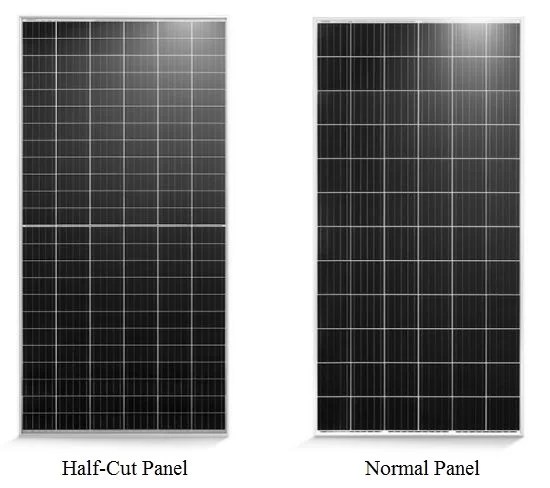
HALF-CUT CELL SOLAR PANELS
Half-split solar panels are panels that are formed by splitting the cells used in conventional panels in half and have some advantages as a result of this process. Instead of being made up of 60 or 72 cells like conventional panels, half-split solar panels are made up of 120 or 144 half-sized cells with the same structural dimensions as shown in Figure 1. Thus, a lower electrical resistance of the internal structure of the panel is achieved and the efficiency of the panel is improved. In addition, half-split panels perform much more efficiently than conventional panels in shading due to the customisation of not only the division of the cells in half, but also the shape of the connection in the panel’s internal structure. Many major panel manufacturers predict that the market share of half-cut panels will increase to 40% by 2028, given the current state of technology.
Current Value and Resistance
When a solar cell is cut in half, it has a resistance of a quarter of a normal cell and produces half the current. In this context, although the halved cells produce half the current of normal cells, since their number is twice as much as normal cells, when we connect these cells together and form a half-cut panel, the current produced by the resulting panel is equalised with the current value produced by a normal panel, while its resistance is halved. As a result of all these, the life of the panels is extended, power losses are reduced by 4 times and efficiency is increased.
Turnaround Time
In addition to having technical advantages, half-cut panels also reduce the payback period of solar energy investment. They provide much shorter payback periods than normal panels, especially in places where shadowing is predicted to occur and where there are space restrictions. In this context, with the help of the relevant panels, cost-effective investments can be made without sacrificing quality and output power.
Connection Type
A typical normal solar panel consists of 60 cells connected in series, each with a voltage of 0.5V. Since the voltages are summed in series connections, the total voltage of the panel is 30V. If the internal connections of half-cut panels are made like normal panels (Figure 2), they produce half the current and twice the voltage of normal panels. This is not a desirable situation as it will complicate the operating conditions of the inverters used in the sector. Therefore, in order for half-cut panels to operate at the voltages at which normal panels operate, their internal connections are made in a different way as shown in Figure 3. Instead of connecting all the cells in series, two groups of 60 half-cut cells are connected in series, each with an output voltage of 30V. These groups are then connected in parallel to each other and the 30V voltage is not exceeded.

2.Panel where Half-Cut cells are connected like normal cells
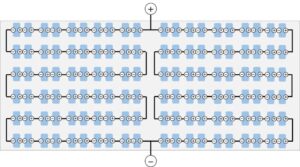
Figure 3. Correct connection form of Half-Cut cells.
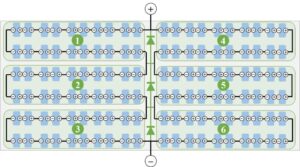
Figure 4. Cell arrays in half-cut panels.

State investment stimulation program “373”
Is a mechanism through which Moldovan producers can access long-term loans for investment.
What advantages do you have?
* You will receive compensation of interest on investment loans from the state; (The difference in interest rates will be subsidized by the Government of RM through the Entrepreneurship Development Organization (ODA))
* You pay for the loan an interest rate of only 7% in MDL or 3% in foreign currency;
* You can conclude an investment loan for a term of up to 7 years;
* The maximum amount of loans can be up to 15 million lei;
* Own contribution is only 10% of the investment project value;
* You do not pay a commission for early repayment and you have a partial exemption from bank commissions related to the loan.
* You receive a maximum guarantee of 40% of the loan amount if you do not have enough collateral;
Read More
Solar panels: service life and guarantees
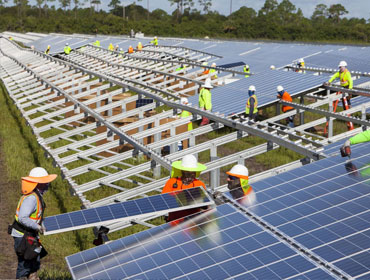
The lifetime of solar panels and their output depends on many factors, including climate, type of module and installation system.
Solar panels are covered by two warranties, two types: 1) product warranty (against manufacturing defects), known in English as product warranty and 2) performance warranty.
The first type of warranty is typical for any product/good we buy. It is a warranty against failure due to manufacturing defects. For solar panels, it is higher than the standard warranty periods for many other products. The usual, most common warranty period against defect for solar modules: 10-12 years.
The most common performance warranty period for solar panels: 25 years at 80 per cent of original capacity. This does not mean that a solar panel’s life is over after 25 years. No, it can last 40 or 50 years, it is just that further degradation of the module is not described in any way by the manufacturer and is not associated with any obligations on his part.
Read More
Solar energy potential in Moldova
The development of solar energy in the Republic of Moldova remains insignificant, except for some photo-conversion plants. The theoretical solar period is 4450 h/year. The real period is assumed to be 2100-2300 h/year, about 50% less than the theoretical period.The best solar season is April-September, or 75% of the annual solar period.
Solar energy – key targets: According to the Energy Strategy, about 1 million square metres of solar installations will be installed for the purpose of (heating) hot water production and 80,000 square metres of solar installations for drying agricultural products.